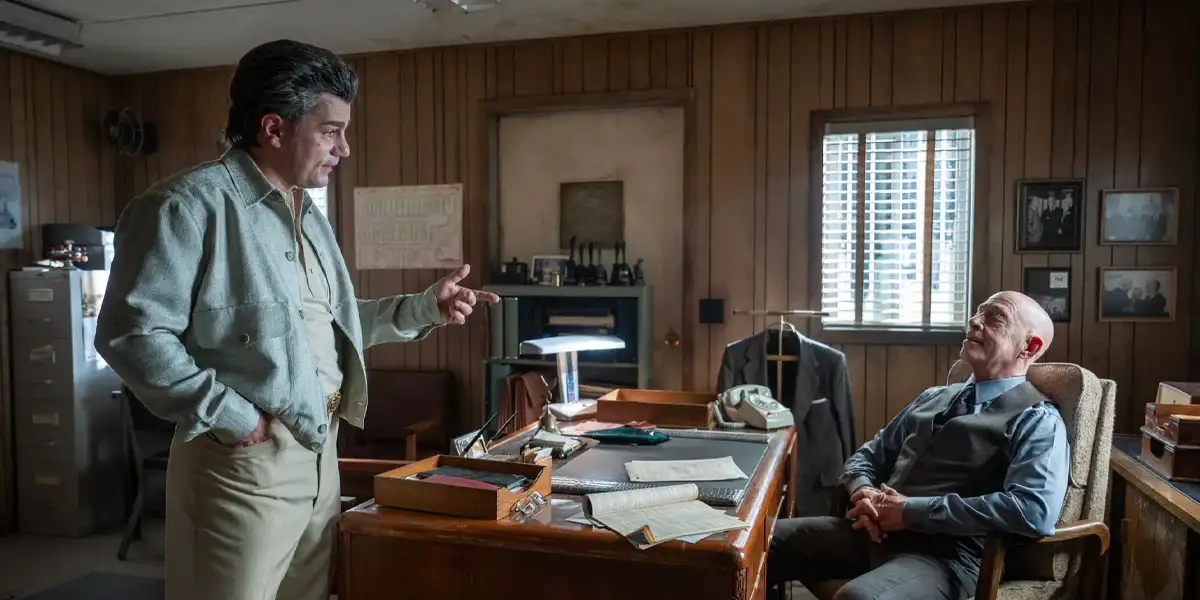
Created by Chris Brancato (co-creator of Netflix's Narcos and MGM+'s Godfather of Harlem) and Michael Panes, MGM+'s eight-episode crime drama The Westies immerses viewers into the brutal, blood-soaked streets of 1980s Hell's Kitchen, New York. Centered on the notorious Irish-American organized crime syndicate that controlled Manhattan's West Side, the series chronicles the turf wars, extortion rackets, and internal betrayals surrounding the multi-million-dollar construction of the Jacob Javits Convention Center.
At the story's core is an explosive generational power struggle. Oscar winner J.K. Simmons delivers a terrifying performance as Eamon Sweeney, the ruthless old-school Westies boss struggling to maintain control over his volatile crew. Rising star Tom Brittney plays Jimmy Roarke, an ambitious young lieutenant eager to modernize the gang's operations. When a botched kidnapping shatters a fragile truce between the Westies and the powerful Gambino Italian crime family (represented by John Gotti and Paul Castellano), Hell's Kitchen erupts into open warfare. To match this visceral criminal landscape, showrunner Chris Brancato reunited with composer Mark Isham to craft an uncompromising sonic identity of raw Celtic punk, gritty orchestral scoring, and traditional Italian ballads.
Mark Isham's Noir-Infused Crime Score
Oscar-nominated and Grammy-winning composer Mark Isham (A River Runs Through It, Judas and the Black Messiah) brings a dark, atmospheric weight to The Westies. Having previously scored Brancato's 1960s Harlem crime saga Godfather of Harlem, Isham shifts gears to mirror the claustrophobic tension of 1980s Manhattan.
Isham's instrumental score avoids heavy symphonic fanfare, leaning instead into ominous ambient synthesizers, muted trumpet solos, resonant acoustic bass, and metallic percussion stabs. In sequence highlights across Episode 1 ("The Troubles") and Episode 2 ("The Houdini"), Isham's cues build palpable dread during late-night alleyway executions and secret dockland meetings. The score captures both the romanticism of Irish heritage and the grim reality of street violence.
Dropkick Murphys' Theme and High-Octane Celtic Punk
The energetic heartbeat of The Westies is its muscular soundtrack of Irish-American Celtic punk and post-punk anthems. The series sets an aggressive tone from the opening credits with its official theme song, "Dropped on My Head" by Boston Celtic-punk titans Dropkick Murphys. The track's blistering accordion riffs, distorted electric guitars, and gang-vocal chorus establish the reckless spirit of Hell's Kitchen's youth.
Throughout the season, music supervisor selections emphasize raw, authentic Irish rock. Scene highlights feature Fontaines D.C.'s driving post-punk anthem "Boys in the Better Land", Kneecap's rebellious hip-hop single "H.O.O.D", Lankum's haunting drone-folk rendition of "The Wild Rover", and Grian Chatten's acoustic track "Fairlies". Promotional trailers set an immediate tone with Australian band The Rumjacks' fiery single "Eye for an Eye".
Cultural Contrast: Irish Punk vs. Italian Neapolitan Classics
One of the most creative musical choices in The Westies is the sharp sonic contrast between the warring factions. While Irish bars in Hell's Kitchen reverberate with Iggy Pop's "The Passenger", Jonathan Richman & The Modern Lovers' "Roadrunner", and The Cranberries' "In the End", the Gambino crime family scenes are scored with vintage Italian Neapolitan ballads.
Tracks like Giorgio Consolini's 1950s romantic classic "Serenata e' Piscatore" and Rita Pavone's pop single "Come Te Non C'È Nessuno" play inside Brooklyn Italian restaurants, creating a stark, fascinating juxtaposition between the old-world Italian Mafia and the volatile Irish street fighters.
Final Verdict
The Westies Season 1 is a standout crime series elevated by an exceptional soundtrack. By pairing Mark Isham's atmospheric score with Dropkick Murphys' opening theme and an electric mix of Celtic punk and vintage Neapolitan classics, the show delivers a authentic sonic portrait of 1980s New York underworld history.
Editorial Rating: 8.7 / 10