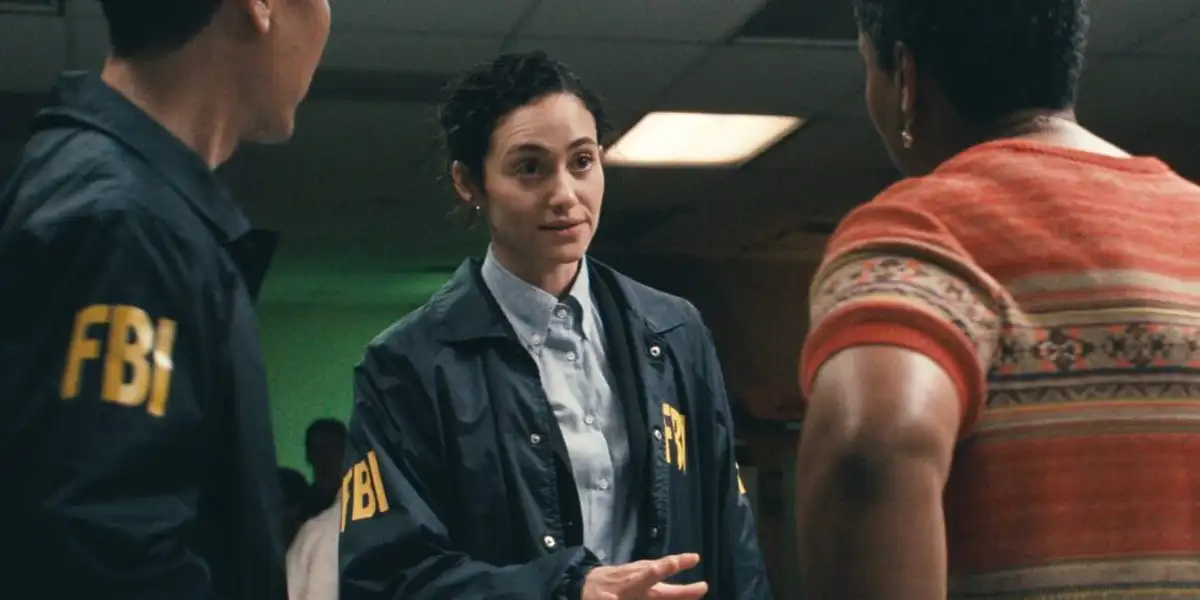
With seven of its eight episodes now streaming on Hulu and Disney+, Elizabeth Meriwether's psychological crime thriller Furious has established itself as one of the summer's most gripping television surprises. Starring Emmy Rossum as relentless FBI Agent Alice Black and Lola Petticrew as the calculating serial killer she is hunting, the series explores an obsessive cat-and-mouse game across America where moral boundaries rapidly dissolve.
While the narrative tension has mounted steadily toward next week's highly anticipated season finale, the series' musical landscape has played an equally crucial role in sustaining its dark, claustrophobic atmosphere. Built upon an unsettling instrumental score by BAFTA-winning composer Anne Nikitin and an eclectic, post-punk-heavy curated soundtrack, Furious offers one of the most intellectually engaging TV soundscapes of 2026. With only one episode remaining, we look back at how the soundtrack has performed across its first seven episodes.
Anne Nikitin's Minimalist, Psychological Score
Having previously collaborated with showrunner Elizabeth Meriwether on the acclaimed series The Dropout, composer Anne Nikitin returns with an original score that is radically different in texture. Rather than relying on traditional orchestral swells, Nikitin crafts an acoustic palette dominated by minimalist string motifs, subterranean bass rumbles, and heavily processed analog electronics.
Nikitin's score functions almost like an extension of Agent Alice Black's deteriorating psyche. As Alice becomes increasingly fixated on her fugitive target, the score's rhythmic patterns become more erratic and claustrophobic. It is a masterclass in psychological scoring—subtle enough never to distract from the lead performances, yet potent enough to instill a persistent sense of dread.
Visceral Post-Punk and Alternative Anthems
The licensed music in Furious is defined by a fierce, nocturnal energy that reflects the show's dark noir roots. In the three-episode premiere ("The Gorgon", "My Life Had Stood a Loaded Gun", and "Memory Distortion"), the soundtrack hits the ground running with blistering post-punk cuts.
Fontaines D.C.'s relentless track "Boys in the Better Land" injects raw adrenaline into an early surveillance chase in Episode 2, while Geese's frantic "Au Pays du Cocaine" underlines the chaotic energy of Alice's investigation. These contemporary post-punk selections are expertly balanced against vintage classics, including Elvis Costello's soulful rendition of "Don't Let Me Be Misunderstood" and Eartha Kitt's seductive "Wonderful Illusions".
Dark Feminine Energy: Fiona Apple, Warpaint, and Patti Smith
As the manhunt intensifies in Episodes 4 through 7, the soundtrack shifts focus toward powerful, dark female voices that echo the psychological duel between Alice and the killer. Episode 5 ("Pick a Sticker") features Fiona Apple's fierce, cathartic anthem "Heavy Balloon", capturing the immense weight of Alice's personal and professional collapse.
Similarly, Patti Smith's sprawling rock epic "Ain't It Strange" and Warpaint's atmospheric 7-minute track "No Way Out" in Episode 6 provide haunting backdrops for pivotal moments of confrontation. The music supervisors also inject unexpected pop and alt-rock surprises, ranging from Arlo Parks' melancholic "Blue Disco" and Fall Out Boy's emotional "What A Catch, Donnie" to Rihanna and Calvin Harris's explosive "We Found Love".
Final Thoughts Ahead of the Season Finale
Across its first seven episodes, the soundtrack for Furious has proven to be a masterfully curated companion to a complex crime drama. By pairing Anne Nikitin's chilling score with an uncompromising mix of post-punk, indie rock, and classic soul, the series has delivered a sonic identity that is as sharp and unpredictable as its central investigation.
Mid-Season Soundtrack Rating (Episodes 1-7): 8.8 / 10